9/07/2009

A Bunch of Quick TV Reviews

I meant to write reviews as I finished watching a series this summer, but that only happened with Heroes. While my summer isn't done yet (3 weeks until school starts--something to do!), here are some shows I've completed.


Firefly. Since this is the first season of a Joss Whedon show, it was awesome. He manages to quickly establish a somewhat foreign world (sci-fi western) and make it work. Unfortunately, Whedon manages to ruin characters the longer his shows go on. I never finished watching Buffy or Angel because things got so weird. (And I can go with weird. I invested time in to multiple seasons of those shows.) But then Willow got addicted to black magic and Cordelia slept with Angel's son from the future and I couldn't care anymore.

Surprisingly, this cast pulls these costumes off. Good work.

Where was I? Oh yeah. The characters on Firefly are clever and fun and, most importantly, witty. I appreciate the diverse group of men and women--especially since the women are given so much respect on the show. Inara is an empowered prostitute, Zoe is a tough second in command and loving wife, Kaylee is a happy-go-lucky mechanic, and River is pretty cool when she's not all crazy.

Dear Joss Whedon,

You write good roles for women. Thanks.

Love,
People who like to see strong female characters on screen, even if it's only the small screen

But I also appreciate that the men are respected as well. Each character is given flaws and redeeming qualities, but are never easily dismissed as a stereotype.

And along with that, it's incredibly refreshing to see a married couple onscreen that isn't constantly bickering or reduced to sitcom tropes. While there's an episode that deals with the potential conflicts in the relationship (when Wash decides to be second in command for a day), they come out better in the end, and remain faithful and supportive of each other.

The Captain and Inara. I love it when production photos just give us what we want.

In fact, there's an episode that fleshes out almost every conceivable conflict: Wash and Zoe's marriage, Inara and Malcolm's attraction to each other, Jayne's mercenary tendencies, etc. That's why I don't feel short-changed by Firefly's brief stay on the air. I'm glad there was a film to tie up loose ends, but I couldn't have asked for too much more, because the next stop could have been a Buffybot.

Freaks and Geeks. I've been hearing about this show forever, so I finally netflixed it, and loved it. This is one of the few high school shows that really touches on being an in-between in high school. I was definitely more of a Lindsay Weir in high school, bouncing around social groups, not really fitting most of them, but finding a solid group of friends to hang out with.

P.S. Every person ever is on this show.

Just like Firefly, I felt like each character got their time to shine and explore their big issues in this season. No one was spared of doing stupid things, like dress in an uber-trendy jumpsuit or go out with some one even though they weren't really into it. But the awkwardness never made me uncomfortable (The Office-style) as much as sympathetic. Each lived through it and came out okay.

But Martin Starr's Bill Haverchuck captured my heart. After all, my freshman year of high school was spent watching VH1 countdowns and Iron Chef reruns. Let's just say I relate to his television habit. But any episode that featured his storyline was a favorite. He's so helplessly nerdy, yet is eternally optimistic. I feel like he'll turn out okay in life.

Lindsay's face is pretty much how I respond to most things in life. Also, Jason Segel, j'adore.

I'm kind of glad it only lasted one season, if only because I don't want to see how different the characters will be the next year. Each year of high school was drastically different for me, depending on who was in my classes or who graduated, so I'd rather just live through one season with these kids so I don't have to see them change too much.


The Vicar of Dibley. First airing in 1994, The Vicar of Dibley kept coming back for the next decade with short series and Christmas specials (IMDb tells me 24 episodes in all). It's one of those shows where a somewhat worldly professional goes to a crazy small town. In this case it's a female vicar Geraldine played by the hilarious Dawn French. I adore the mixture of pop culture and religious references throughout (I can relate). I never got sick of the perverted and tedious old men in the town, or the slightly stupid verger. In fact, the jokes at the end of each episode where Gerry tells her verger Alice a joke that Alice doesn't get are my favorite parts.


Although Alice does get this one...

Perhaps they brought the show back too many times over the years (later episodes have a lot of "When you first got to Dibley, I hated you" reminiscing), but it's worth watching every minute, if only for the last Christmas specials, which have my favorite melancholy cotton mill owner, Richard Armitage. Anyway, it's a funny little Britcom that I enjoyed immensely.

This really could have been made any year, considering the wardrobe.

P.S. Did I mention how much I love the theme music? Here's the full version of the song:


You should know I'm a choir nerd by now.

9/06/2009

Gone With the Wind: The Movie!

Gone With the Wind (1939) is often hailed as one of the greatest films of all time. I have a hard time with that assessment after rereading the book, mostly because there is no possible way to do justice to the book. The 1939 Hollywood version certainly gives its all to bring the story to life, and it's surprisingly successful (not only for creating a semblance of the overall story, but because of the hell of even shooting the film). Here are scattered thoughts from my recent viewing.

Some great things the film does:

1. A TOTALLY EPIC MOVIE. Everything from the score, to the long tracking shots, to the detailed costumes screams cinema. From the opening overture, you know this is going to be melodrama at its finest.


2. Managed to economically fit in a lot of story. They cut out characters, create composite characters, got rid of some of Scarlett's children, used quick sweeping shots to create setting, and overall left out less pivotal moments to create a manageable plot. That's pretty impressive to cut an 1,000 page book to less than 4 hours.

Best proposal scene ever.

3. Showing cinematic smarts, the dialogue against the sacred cause of war is replaced by disturbing images of wounded and sick men. Multiple times, we're taken through a tracking shot of--even still--disturbing scenes of carnage without being overly gory. (Side question: how would this film had been made post WWII? Would the war be seen as more honorable and less cynical?)

This shot alone is more effective and more subtle commentary about the horrors of war and the honor we esteem it than the entirety of Saving Private Ryan.

4. Clark Gable as Rhett Butler kills. I usually feel like he's amused that he's even making a living through movies. He kind of walks through his roles based on machismo and dimples, but it's focused for the better in this film. Mr. Gable's sense of humor fits the role perfectly, and we even get to see him cry in this movie. He even manages to distract me from how much I hate the movie version of Scarlett. Win.

Rhett, I would give you a hug if I didn't think I would get syphilis from it.

5. Speaking of acting, I'm always impressed by older films when they use long takes instead of shot-reverse-shot for conversations to take place. Some of these scenes aren't easy since they, by necessity, contain mood changes. So a happy exchange can turn to bickering, or a crying scene can turn into a humorous one. The theatrical training of this group of actors is clearly shown in the film's long scenes.

7. Cheesy old movie dialogue. Oh and censorship! Heaven forbid that Rhett says that he wants Scarlett, you know, in a sexual way. No, let's just say he loves her. But then deny it. But then he really does. Hilarious.

This looks uncomfortable.

Some stuff that I wish the film did better:

1. Vivien Leigh does the best she can. Unfortunately, her stagy acting can only paint Scarlett in the broadest strokes possible, although I'm impressed that Leigh does as well as she does. It's really an impossible role since the book gets more into what Scarlett thinks of the world than how the world looks at her besides idle gossip. Not to mention the speaking out loud to get internal thoughts across. It just comes across as cheesy, and that just leads me to loathe Scarlett. It's a miracle that Margaret Mitchell made Scarlett so likable, or at least fascinating enough to humor, in the book considering how the bare facts of Scarlett's actions in the film come off as either idiotic or bitchy. I mean, they might be idiotic or bitchy things to do, but coming from the character's internal perspective, it makes sense.

Ultimate downfall of Vivien Leigh: her inability to smile with her eyes. Creepy.

2. The film certainly used Scarlett's biased view of Melanie in the film, and it makes her annoying. She's sanctimonious and ignorant instead of genuinely good. I always suspect Melanie knows more than she lets on when I read the book (you also get a little of her perspective by the end), and I wish that intelligence showed more in the film.

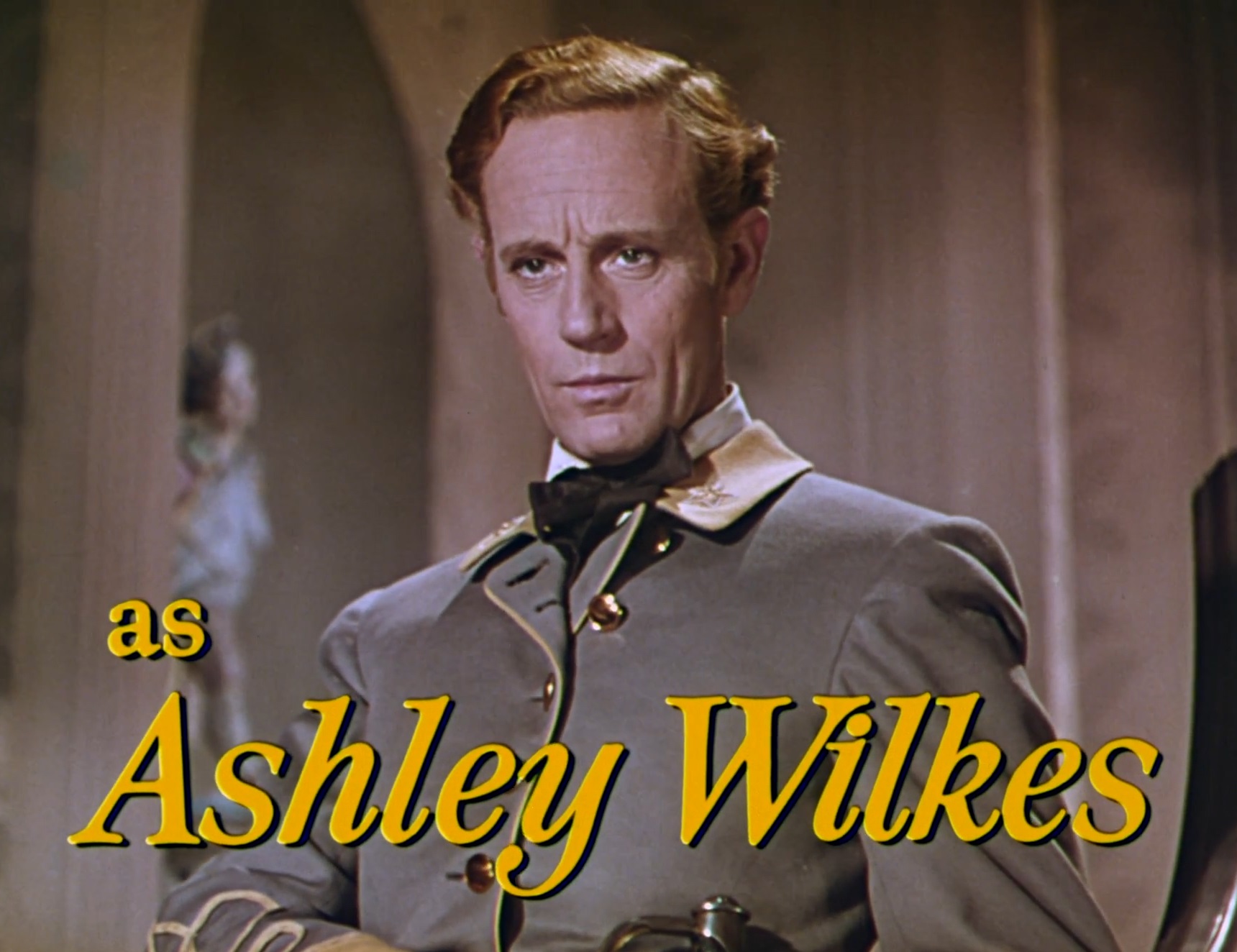
3. Ashley Wilkes is supposed to have a mustache. Film-Rhett is the obvious choice in the facial hair department, am I right?

Sorry, Leslie Howard, your barren face gave way to your ultimate fate.

4. I know they didn't really have time for it, but I wish there were more "aww shucks" moments between Rhett and Scarlett. I feel like most of their screen time is spent fighting. Let's just say they could've have slipped in a little more sexy financial talk, if you know what I mean.

Aww shucks!

9/03/2009

Shockingly similar reactions

I finally got around to Zach Braff's Garden State (2004) and Martin Scorsese's Mean Streets (1973), and I got pretty bored with both films. This probably has less to do with the quality of the movies (they're not terrible as much as merely adequate) and more to do with their influence on films since they came out.

I tried to watch Garden State once before, but about a half hour in I was bored enough to just go to bed. This second time, I was wide awake, but still had to force myself to plow through the first chunk of the film where the protagonist is still unemotional and no one likable has even come into the film. As it gets going, however, more personality comes across as Braff and Peter Sarsgaard lose the loathesome behavior and really breathe life into an otherwise bipolarly boring/overly poignant script. And as much as I like Natalie Portman, she once again proves why I have no idea why I like her so much. She does better with smaller films since she's not a very big actress (neither physically or acting-wise), but she's still not that spectacular. I couldn't help but compare her crazy character to Kate Winslet's in Eternal Sunshine of the Spotless Mind (2004) and see her coming extremely short in creating an interesting and attractive character out of weird behavior. I still like you, though, Natalie.

And like most folks my age, I have a copy of the Garden State soundtrack. It features of mix of new indie bands and mellow older songs that are the hallmark of quirky independent film lately (extra reading from the Culture Warrior). Unfortunately, the moments when this music shows up for 30 seconds are some of the best parts of the film if only to break up the silent, static shots of Zach Braff staring into the camera blankly. Sorry, but the brief soundtrack probably shouldn't be the best parts.

I think why I'm had so much trouble liking this movie is because it seems like it's everyone's favorite film ever. But like its hipster cousin Once (2006), I was merely whelmed* instead of inspired. I liked it okay, but the overly excited hype made me feel bad about not liking it more.


At the end of Roger Eberts retrospective on Mean Streets, he states, "In countless ways, right down to the detail of modern TV crime shows, Mean Streets is one of the source points of modern movies." I certainly saw that. But besides being an early example of the small scale crime drama, it gets a little boring. Perhaps because it was so pioneering, it feels cliche. But I think it's also evident that this is one of Scorsese's earlier films, since this feels a little like a less sleek and less fun Goodfellas, although with a healthy dose of remorse. (Oddly enough, one of my biggest complaints with Goodfellas was the lack of remorse.)

There are some good performances, with De Niro playing a dumb member of the mob who gets into money trouble. And the frequent fights set to upbeat pop or traditional sounding Italian music were the most entertaining parts for me (Scorsese classic contrast!). The fights looked sloppy like real fights actually look which brought more realism to the film than anything else. Although the ending violent shootout had some humorously bright colored blood spraying out of bodily orifices which made me laugh hysterically. Perhaps this wasn't the intended response. In fact, I don't think I really responded as strongly to any other part of the film as I did with this scene. I should probably seek out more spectacularly gory horror movies.

Anyway, the downfall of both films was that they both spent a lot of time on unlikable characters doing tedious things, which compels me find something else to do while watching the movies rather than give my full attention. However, both films had some intriguing, if inconsistent, performances and soundtracks that are awesome and carried me through the film when nothing else did.

All in all, I don't think I'll ever seek these movies out again. They just don't appeal to me. But don't worry. I feel bad about it.

P.S. Movie highlights: Garden State features Jim Parsons in a knight costume. Mean Streets features the same opening credits song as Dirty Dancing. Again, I think I was missing the point of both films. Oh well.


*00:59

9/01/2009

The Audacity of Rock: Part 25

I'll show you how I hard rock with my double bass pedal and screaming vocals.

Thrash metal reached its heyday in the early 90s, and yet its legacy still lives on, despite its waning mainstream popularity. But I'm always surprised at how ubiquitous hard and fast rock still is. This is not my style of music, being one who desires melodies and nuance, but if you're going to be angst-ridden and misanthropic, you might as well do it thoroughly and loudly instead of wallowing in self pity and poorly played instruments.

"Angel of Death" by Slayer (1986)

By this point, heavy metal like this is beyond cliche. I have a hard time imagining how edgy is must have been at the time, playing as fast and loud as possible because now it just seems ridiculous. Unfortunately, like repetitive soul music, more fun to move around to than to listen to. Seriously. This music is torture unless you're moshing yourself into oblivion.


"Blood on My Hands" by The Used (2009)

Screamo seems to be the contemporary incarnation of heavy metal. It's the kind of music a pair of roommates I had one year would listen to when they were particularly angsty/menstrual that day. It's got a sprinkling of emo, in that it's less about the Reaper than heavy metal of yore, but I can stomach it better since at least these people are angry which is way more fun than being whiny. Here's the Used's fairly radio friendly newest.


Questions to ponder:
1. What was/is your angry music?
2. What was the angry music of back in the day? Or did people not have time for it? Like Bach-era music? That's just too clinical to really get down to, amiright?

8/30/2009

Highlights of Love with the Proper Stranger (1963)

When a one-night stand results in pregnancy, a musician and a young girl try to resolve the issue together. (via)

This isn't a spectacular movie, but when the leading roles are so attractive and the film makes an effort to explore a complicated relationship, I enjoy myself.

Main highlights:

1. Steve McQueen in a romantic leading role. Not needing to show much range besides frustration, anger, and occasionally resigned kindness, this role works for him.

2. Natalie Wood's hair. It almost makes me want bangs again, even though I never really like having bangs, but they look adorable on her. Does any one else have this problem every time they see a good pair of bangs?

It also makes me want to curl my hair, but then I remember how lazy I am in the morning, so I should probably stop obsessing about her hair.

3. Aren't we all glad abortions aren't given in sketchy apartments and done by sketchy non-doctors anymore?

4. Both Steve McQueen and Natalie Wood are playing Italians with ridiculously stereotypical parents. I guess once you've played a Puerto Rican, you can play anything vaguely ethnic. But Steve McQueen? McQueen?

5. The ending scene made me giggle profusely, because I am actually a really girly romantic if you give me enough realism to go on. And someone might do this...maybe:

That's a banjo he's playing there, if you can't tell.
(Huge smile on my face.)

8/29/2009

Medley of the Day: Spoon edition

Via The Phrase Finder:

"Born with a silver spoon in one's mouth."

Meaning: Born into a wealthy family.

Origin: This is commonly thought to be an English phrase and to refer to the British aristocracy. That may well be the case, but the earliest citation in print is from the USA.

Deb. U.S. Congress, 1801:

"It was a common proverb that few lawyers were born with silver spoons in their mouths."

Mediaeval spoons were usually made of wood. Spoon was also the name of a chip or splinter of wood and it is likely that is how the table utensils derived their name. It has been a tradition in many countries for wealthy godparents to give a silver spoon to their godchildren at christening ceremonies. That may be the source of the phrase, or it may simply be derived from the fact that wealthy people ate from silver while others didn't.


1. "Gold" by Interference. Classical usage: "I was born with a silver spoon."

2. "Substitute" by the Who. Reworked usage: "I was born with a plastic spoon in my mouth."

3. "Gold Dust Woman" by Fleetwood Mac. Virulent usage: "Take your silver spoon and dig your grave."